Books That Changed My Mind
Most books you read and enjoy, and that's plenty. A much smaller stack actually moves something — the way you think about your own sabotage, your own numbness, your own relationship to the ground you live on. This is that stack. Twelve books, not all of them comfortable, a few I picked up expecting one thing and put down thinking about something else entirely. That's more or less the whole point of reading like this.
The Mountain Is You — Brianna Wiest
The one that named what I'd been calling laziness
 |
This is the book that finally put a real name on the thing I'd spent years calling laziness or being "bad with follow-through" — self-sabotage, and the very specific logic underneath it. Wiest doesn't scold, she just keeps pointing out that the pattern was protecting you from something once, even if it's costing you now. I put this down and immediately looked at three habits differently.
Project Hail Mary — Andy Weir

The one that made me cry over an alien
I did not expect a book built out of orbital mechanics and chemistry to be the one that wrecked me, but here we are. A lone scientist wakes up with no memory, a dying sun to fix, and — eventually — the strangest, best friendship in anything I've read this year. It's a book about competence and hope existing in the same sentence, and it changed how impatient I let myself be with slow, unglamorous problem-solving. Also: bring tissues.
My Year of Rest and Relaxation — Ottessa Moshfegh

The one that gave permission to be unlikeable
A narrator who decides to sleep through a year of her life is not exactly a sympathetic premise, and Moshfegh doesn't try to make her one — which is precisely why this book landed the way it did. There's something freeing about a woman on the page who is numb and messy and not remotely interested in being liked for it. I stopped editing my own worse feelings into more palatable ones for a while after this.
The Women — Kristin Hannah

The one that rewrote what I thought I knew about Vietnam
Every version of the Vietnam War I'd absorbed growing up centered men. This one follows an Army nurse — the women who served, came home, and then had to fight to be believed they'd been there at all. It's the kind of historical fiction that sends you straight to research afterward, which I did, and which made the anger in the book's back half hit even harder for being true.
Man and His Symbols — Carl G. Jung

The one that made my subconscious feel less like a stranger
Jung's last work, and the one written to actually be readable — full of dream imagery, myth, and the idea that the symbols showing up in your sleep and your art aren't random. As someone who writes songs out of images I don't always understand until later, this one felt less like theory and more like being handed a flashlight for a room I'd already been standing in for years.
Kitchen Confidential — Anthony Bourdain
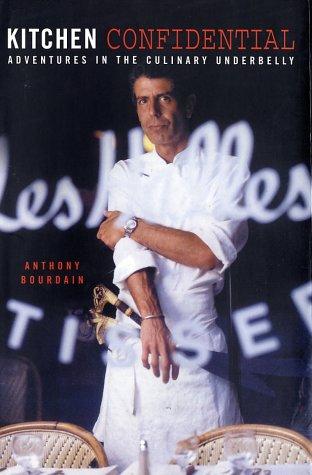
The one that taught me to respect the grind without romanticizing it
Bourdain is funny and unsparing about restaurant kitchens in a way that maps disturbingly well onto any creative industry that runs on passion and underpays for it. What changed for me wasn't the specifics — it's the honesty. He loves the work and tells the truth about what it costs at the same time, without picking one or the other. That's a harder balance to hold than it sounds, and a good one to borrow.
The Nightingale — Kristin Hannah
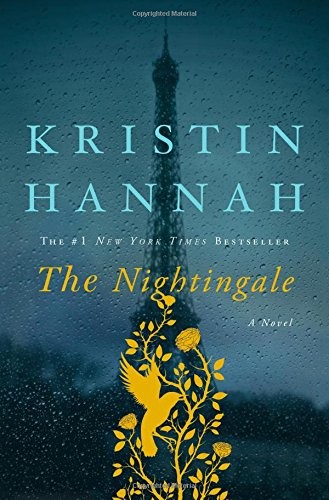
The one that made quiet resistance feel loud
Two sisters in occupied France, one running toward danger and one holding a household together against it, and the book makes an argument I hadn't fully sat with before: that the quiet, domestic kind of courage is not the lesser kind. I finished this one and thought differently about every "small" act of holding-things-together I'd ever dismissed as not really counting.
The Marriage Act — John Marrs

The one that made me argue with a book at 1 a.m.
A near-future where the government tests your marriage and can order you to divorce if it "fails" — and somehow the most unsettling part isn't the premise, it's how many of the characters' choices I understood. This is the one on the list built to make you uncomfortable on purpose, and it worked. I had actual arguments out loud, alone, with the ending.
I Who Have Never Known Men — Jacqueline Harpman

The one that's stayed with me longer than I expected
Forty women held in an underground cage for no explained reason, and a narrator who was born there and has no memory of anything else. It sounds bleak and it is, but it's also one of the strangest, most patient meditations on meaning — what you can build a self out of when almost nothing has been given to you — that I've read. Quiet book. Loud aftermath.
The Artist's Way — Julia Cameron

The one I keep returning to whenever the well runs dry
This is less a book you read once than a practice you keep coming back to — morning pages, the weekly artist date, the slow work of clearing out the blockages you've built up around your own creativity. I don't do the full twelve weeks every time. I do come back to it every single time the writing stops feeling like mine.
Big Magic — Elizabeth Gilbert
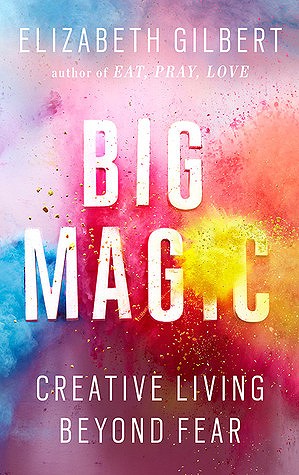
The one that got me to stop waiting for permission
Gilbert's whole argument is that ideas are alive and looking for a collaborator, and that waiting until you feel "ready" or "good enough" is how you lose them to someone braver. I read this at a point where I was sitting on a lot of unfinished work out of fear it wasn't good, and it's the reason some of it exists now instead of still sitting in a folder.
Braiding Sweetgrass — Robin Wall Kimmerer
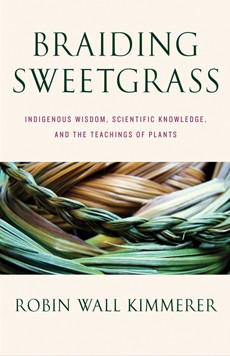
The one that changed how I look at everything growing outside my window
Kimmerer braids together Indigenous teaching and her own training as a botanist, and the through-line — that the land is a gift, not a resource, and that gratitude is a practice with real weight to it — is the one idea from this whole list that's followed me the furthest outside of reading time. I notice plants differently now. I notice what I take differently now.
A note: some of the links above are affiliate links, which means if you buy through them, I earn a small commission at no extra cost to you. It's how this little corner stays running — thank you for reading, and for letting me share what's actually rearranged something in my head this year.

Comments
Post a Comment